Keith Parker
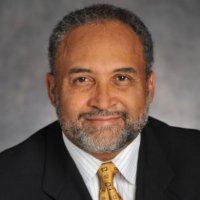 Keith Parker served as the Associate Vice Chancellor for Government and Community Relations at UCLA for 19 years before he announced his retirement in December 2017. He served UCLA for a total of 36 years, advocating at the local, state and federal levels for policies that would benefit the UCLA community. He is continuing his commitment to higher education in his role on the board of the California Coalition for Public Higher Education. UCLA Alumni Association members have been involved with the Coalition since its founding in 2011, as former Alumni Association president and former UC Regent Jeffrey Seymour ’73 was a founding member of the Coalition. Parker has spent his entire career advocating and working in public education, and now continues his advocacy through the Coalition.
Q: Why was the Coalition formed?
A: I worked at UCLA for 36 years, and I worked in public education my entire career… I was responsible for UCLA’s advocacy with elected officials at the local state and federal level. Our particular emphasis, certainly during the last 15 years was the instability of the funding from the state. Sacramento was a priority. My cliché was always, “That’s the dog that bites us,” because either through the budget process or subsequent legislation Sacramento had a greater impact on the wellbeing of the university… While we were increasing the number of students (to overcome budget cuts during the recession), we were also trying to maintain the quality of the academic experience because California needs a highly skilled workforce to be competitive in a global economy. Between the UC efforts, CSU efforts and the community colleges, public higher education was under threat. We needed to come together as systems and work collaboratively to advance both the needs of our institutions but also the contributions of our institutions to the state, so legislators would have greater understanding of both the long term and short term implications of the decisions they were making.
Q: What are the goals of the Coalition and how did you become involved?
A: The Coalition has been in existence about eight years. It is a group of volunteers who have UC, CSU or community college ties. It operates outside of the three systems and it has to because we have a political action committee which does make donations to political candidates. It needs to be independent, but supportive of the three systems. I participated in Coalition events, I know the principles of the Coalition, and some of our key UCLA advocates were the founders of the Coalition, so we had long term relationships. When I retired in December 2017, the Coalition asked me to join the board, and I was very happy and accepted that opportunity to join in a much more formal way, and continue the kind of work in higher education advocacy that I’ve always believed in.
Q: What are some examples of current projects underway with the Coalition?
A: We’re doing a number of meetings with campus leadership, and that’s the chancellors and presidents of UC, CSU and the community colleges, not only to increase their awareness of the Coalition and its work, but also to get a sense of what are their priorities that we can incorporate into our messages? Right now the Coalition is interested in who will be the next governor… and who is going to be in the legislature in the future. We will be interviewing candidates and making decisions on endorsements and support, and our number one issue is where they stand in terms of support for higher education in the state in all three sectors. We’re looking for the champions [of public higher education].
Q: Does the UC, CSU and community college systems have different or similar goals?
A: The goals are common in the sense of adequate financial support to ensure the quality of the academic experience. Whether you’re at a UC, a CSU or a community college, you want the education pipeline to stay open, affordable and accessible to all students, and you want support for research, for teaching and for service. No matter where you go in the California public higher education system, those are common threads. That was the goal that made this state the Golden State. The support the state and people provided made the UC system the strongest system in the nation, the CSU the strongest system of that nature, and the same for community colleges. There was always a point of access for anyone who wanted to avail themselves to the benefits of higher education. We’re losing that overall goal as we’ve gone through cycles of budget cuts.
Q: What are some of the potential problems in higher education related to losing state funding?
A: We’re losing the overall goal. The systems are rightfully concerned with not being able to provide California with the kind of workforce that it needs for the future. The two things all of our systems produce are innovation and talent. Innovation creates the jobs of the future, and talent provides the workforce of the future. Those are the two things California needs from its educated population, and our jobs as institutions of higher education is to continue to produce that educated population.
Q: What do you do as a board member?
A: I’m a board member who is involved in our interface with institutional heads, such as presidents and chancellors, advocacy with members of the legislature who I have known a long time, and I hope to be able to engage people with the Coalition. There are several ways that people who are retired, employed, parents, students, or people who just care about public higher education, to be involved. We have a vibrant website that provides information about what the issues are. People can write their legislator, call their legislature, people can help us raise money, make donations. What I want to try to do is to continue to let people know what the issues are and how they can make a difference.
Q: How has public education affected you personally?
A: I know that I would not have had the career I had had it not been for public higher education. I went to school in Indiana and Minnesota, and those are land-grant institutions just like the University of California. I know had that not been available, my life would have been very different. And I know for a countless number of people that opportunity was so important. I like to say, people opened doors for me and our job in terms of paying them back is to keep those doors open for others. That’s what we need to do, and it takes a collective effort to do that. We’re not saying our issue is more important than healthcare or transportation, but we are trying to say to policymakers, governor and members of the legislature, that they should understand the short and long term effects of the decisions that they make.
Find ways to support the Coalition and become involved through advocacy, volunteerism or make a donation at the California Coalition of Public Higher Education website.
Our Proud Partners


