Yoni Danieli ’02
Israeli combat medic paratrooper, 2002-04
After serving in the Israeli army and traveling the world, Yoni Danieli ’02 is taking the ... floral industry by storm?
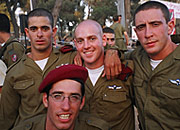
1. What was your motivation to serve in the Israeli army?
Every Jew I know serves Israel in one form or another, and my form of service stemmed from wanting to do it more actively. I grew up loving the state of Israel, and spent a lot of my summer and winter breaks visiting there. My parents brought me up in an Israeli household, and I absorbed a lot of the culture through them, so this bond I had with the state came naturally. In Israel, due to the threat they live in, all civilians are required to enlist, and I felt that it was my responsibility as well.
2. How did you prepare yourself for service?
For the physical preparation, I really did not do more than run regularly. I was told there was not a whole lot I could do to fully prepare for service in a combat unit. That is what basic training is for. Desire would have to carry me. No matter how much you can lift, or how fast you can run, being a paratrooper is still going to be challenging. What was put to the test more than anything else was my head. I read all types of different books, took courses on the history, the conflict in Israel and the different religions involved. Learning a lot about the history of the region put me in tune with my purpose. Because I knew I wanted to become a medic, coupled with the fact that my Hebrew was not as good as natives, I also completed an EMT course at UCLA to give me a head start on the academic aspect of my service.
3. What did you do in the army?
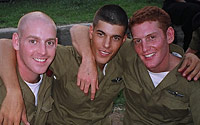
I was a combat medic in the paratroopers for the first year of service. Due to complications in my hip, I was then transferred to be a part of a med-evac unit. Two of my most revered interests blended seamlessly during my service: my interest in the well-being of Israel and my interest in medicine. It was extremely fulfilling.
4. Did you ever treat people from the other side of the conflict?
I did have to treat people on the other side of the conflict, and they are treated exactly as anyone else. Medicine knows no ethnic boundaries.
5. What was most difficult about the transition from UCLA student to Israeli soldier?
As a student, if you didn’t like one of your courses or were not doing that well, you had the option of dropping it. In the army, quitting was never an option. Not many people truly enjoyed the actual physical work they did in the army. It was hard, it was hot, the days were long, and it was every day. There was nothing pleasant about sleeping in the desert, carrying obscene amounts of equipment and taking orders day in and day out. I just had to suppress the thoughts of giving up and keep pushing. Satisfaction was found in knowing that we were all doing our part to defend our land. This was something I was prepared for and looked forward to for years.
But the most difficult change was the sudden realization that we (Israelis) are all targets in this conflict. There is no distinction in the enemies’ eyes between civilians and soldiers.
6. How much did you understand the conflict in the Middle East?
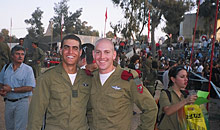
My understanding of the Middle East conflict was based primarily on an academic background and growing up with parents who were born and raised in Israel. Whereas I would read about it everyday in the newspaper, Israelis live in this daily struggle. Most Israelis that I knew were quite educated on the subject and were politically active. Children in high school were already participating in political movements, and soldiers serving with me were very informed about Israel’s current affairs. Every night when newspapers were handed out, they would urgently read them cover to cover. The Israelis have a deep connection with the land that I have never seen before. This conflict does not just affect them in their day-to-day lives (such as worrying about taking the bus, or being in public places), but they are affected personally.
7. Was there a period of recovery after you left the army?
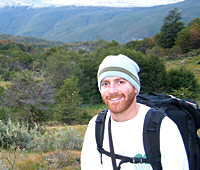
The only recovery that was essential was to learn how to become a civilian again. For two years, my life had been strictly about the army – the things I did, the discussions I had, the clothes I wore. All of a sudden, I was a civilian again. Nobody was giving me orders anymore, my daily interactions were no longer military related and my time was my time. That was as abrupt a transition as going from a civilian to a soldier. I had to re-adapt to what I used to be. So I took an eight-month backpacking trip through South and Central America. I had nothing but time and options and endless social interactions.
8. What was your favorite place?
My two favorite places while traveling, the only two I visited twice, happen to be quite different: Buenos Aires, Argentina and Utilla, Bay Islands, Honduras. Buenos Aires is a bustling metropolis, populated with the warmest people, a nightlife that never stops and the best food on the planet. A 21-ounce filet mignon, so tender you could cut it with a butter knife, only cost about $5.
Utilla was the icing on the cake for me. The Bay Islands are off the northern coast of Honduras and Utilla is the smaller, less touristy one. These islands are world-renowned for their scuba diving. The water is so warm you can dive without a wetsuit, and it is probably the cheapest place to go diving. I completed two levels of certification, 13 dives and room and board for approximately $400. I returned to Utilla for the last part of my trip and it was the perfect finale – wake up, go for a dive, hang out on the hammocks overlooking the beautiful Caribbean, hop in for a swim, barbecue with other backpackers, go to the bars on the docks and then wake up to do it all over again. Totally peaceful, the epitome of a vacation.
9. What is your craziest experience from all your travels?
A friend of mine from school had a special request for a picture of Garibaldi Street (in Buenos Aires), which is where Adolph Eichmann was captured. Eichmann was one of the highest ranking Nazis in WWII who devised the “Final Solution” during the Holocaust.
Two other friends and I set out to take the picture. Unfortunately, we only knew of the street, but not the exact location. We negotiated with a cab driver, who was not familiar with the site, to drive around until we found it. Eventually, we got to Garibaldi Street and got out of the cab to start photographing different houses. Suddenly, two police cars come racing down the block, sirens blaring. The officers jump out of their cruisers, with weapons drawn and scream in a language that I am just not that comfortable with. The only thing I understood, thankfully, was “¡manos arriba!” which means hands up. They threw my friend up against the cab. Apparently, cab drivers are frequently kidnapped and ransomed in Buenos Aires, and a local noticed suspicious activity in our taxi and reported it to the police. After the officers verified that the driver was not kidnapped, they took their weapons off us. When we told them what we were doing, they broke out in laughter, and told us that Eichmann’s house was 40 blocks in the other direction.
The house was located in a bad neighborhood, and since it was getting dark, we decided that we had pushed our luck enough for one day and called it a night. It was pretty scary for my friend who was manhandled. But my other friend and I were relatively amused.
10. What are you doing now?
I work for my father in the floral industry. We are suppliers of specialty flowers to the wholesale industry in many parts of the United States. Our supplies come from a farm that we own and operate in Wisconsin and some are also imported.
11. What are your future plans?
As much as I loved and cherished every second that I lived in Israel, the likelihood that I will return there to live for good is slim. However, I plan on visiting Israel as often as possible if I have the means to do so. With regards to settling down, my family lives near me in Chicago and I plan on making my life here. I plan to enroll in business school for the fall of 2008.
Our Proud Partners


