David Zuckerman ’84
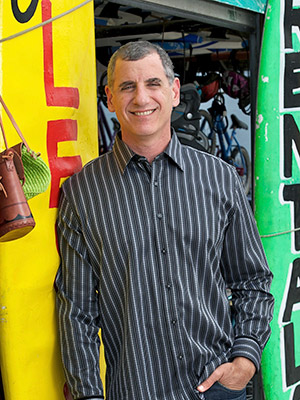
From his early backyard dramas to his hit television shows, David Zuckerman is a storyteller. The television writer and showrunner is best known for shows like “King of the Hill,” “Family Guy” and “Wilfred.” He is currently considering his next project and taking time to give back to young writers. He was kind enough to answer questions for UCLA Alumni Connect at 37,000 feet on board a plane heading for Europe. He shares an insider’s view of the creative and competitive business of television, and words of wisdom for people hoping to break into the entertainment industry.
Zuckerman refers to his time between projects as being “funemployed.” He says, “Mostly I’ve been laying low and waiting for something that really inspires and excites me. If I’m going to commit myself to creating and running a show, it needs to be something I’m really passionate about.” Zuckerman is also championing the next generation of television writers. "I’ve been fortunate to work with some really brilliant writers and I’ve learned from them. I also enjoy mentoring younger writers and am proud to say I’ve helped launch a few careers." One way he is doing so is through his involvement at the UCLA School of Theater, Film and Television (TFT). “I never really had a mentor. No one reached out to me, and I lacked the confidence to reach out to others. I’ve been extremely fortunate to have learned from some great writers, so I’d like to identify and offer guidance to talented up-and-comers. Getting involved in TFT offers me an opportunity to do that.”
One of Zuckerman’s earliest memories was watching his parents perform in community theater productions, and by age seven, he was training with the American Conservatory Theater’s Young Conservatory. Even as a youngster he realized that instead of being a player, he’d rather make the play. “While I enjoyed acting, I was much more interested in creating stories and plays that I acted out in my backyard.” Zuckerman was nine when he wrote his first spec script, about a man’s mid-life crisis and move to Portland, Ore. to write a novel. He says, “I re-read it recently, and with all due modesty, I gotta say, it was not too bad for a fourth grader!” It was the 1970s and Zuckerman was growing up east of the San Francisco Bay in Danville, Calif. He loved watching shows with Mary Tyler Moore and Bob Newhart, and reruns of “The Dick Van Dyke Show,” identifying with the title character. “On the show he played a TV writer who spent his days in the office cracking jokes with other funny writers and then went home to Mary Tyler Moore. Even as a kid, that seemed like a pretty good life!”
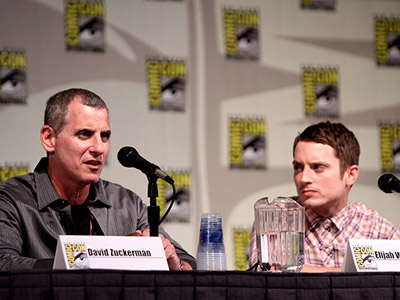
After high school, Zuckerman attended UC Santa Barbara, where as a sophomore he won a Samuel Goldwyn Writing Award. He transferred to UCLA to study at TFT. “I chose UCLA because I wanted to be a writer and UCLA was known, then and now, as the premiere school for screenwriting. Also, it was in-state so my parents could afford to send me there!” At UCLA, he was inspired by reading “The Art of Dramatic Writing” by Lajos Egri, which he felt “crystallized how to give a character a dramatic arc.” He studied writing with Lew Hunter and Richard Walter, with Professor Walter letting the undergrad Goldwyn Award winner enroll in his graduate course. He says, “I learned a lot from them, although I don’t think the scripts I wrote in their classes were particularly good and they were likely disappointed in me!”
As a student, networking did not come naturally to Zuckerman. He believes this skill would have helped him in college and throughout his career. He says, “I don’t think my college experience was all that it could have been. The other students in your programs are potential lifelong allies and friends in the industry. There are a lot of guys I went to film school with who are now running studios and winning Oscars. I don’t really know any of them. Learn from my mistake! Get involved, network with your fellow students and have fun too!”
After college, Zuckerman did not find instant success as a writer. After a job in media sales, a position at a literary agency led to a low-level executive job at Lorimar in comedy development. Eventually, a friend helped him land a job at NBC, which gave him the chance to meet and work with writers. His break came in 1993 when Gary Miller hired him as a staff writer on “The Fresh Prince of Bel Air,” a show about a teenager who moves in with his rich aunt and uncle. It was Will Smith’s acting debut, a hit show with a catchy theme song. He says, “That was a particularly tumultuous experience, but it made my dream of becoming a TV writer come true. I’ve been fortunate to make my living that way ever since.”
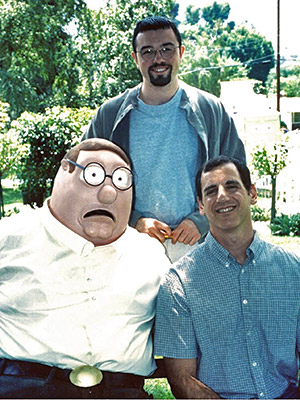
Zuckerman has worked on some of television’s most loved, and most successful, shows. After “The Fresh Prince,” he became a writer and producer on “King of the Hill.” The animated series, on Time magazine’s list of “All-Time 100 TV Shows” (2007), found humor in the daily lives of an “average” Texan family. He says the program, “had a sharp point of view and a strong, satirical message about the death of common sense in America.” Zuckerman went on to be the original showrunner and executive producer for the animated adult sitcom “Family Guy.” The series has a cult following of viewers tuning in to watch the antics of a politically incorrect family. Zuckerman describes the show as “just straight-up entertaining. It’s not trying to make you think, it just wants to make you laugh.”
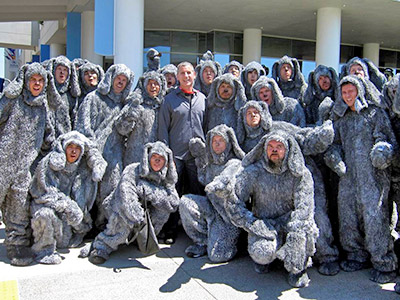
Most recently, he was the showrunner and executive producer for “Wilfred,” a show about a man who sees a man in a dog suit whenever he looks at his neighbor’s dog. Zuckerman says the show, “had a narrower appeal, but the audience seemed to appreciate it on two levels. To some it was just a weird, existential stoner comedy about a guy in a dog suit. To others, it was a more complex story about recovery from depression and mental illness.” Zuckerman created the adaptation of an Australian show, and developed the story of a depressed man’s emotional journey to find happiness. The show really connected with viewers, “One guy wrote a public blog post saying that an episode dissuaded him from committing suicide. The fact that it had such a strong impact on some viewers was really gratifying.”
As a showrunner, Zuckerman is responsible for managing all aspects of production, with authority over creative decisions. He says, “When I’m running a room or a show, I rely on my ability to listen to the people around me and strive to be objective in my decision-making. I think of myself as an impartial judge, weighing the arguments of the writers with whom I’m working. I don’t always come up with the best pitch, but I’m pretty good at recognizing it when I hear it.”
While Zuckerman may feel he could have been more involved while at UCLA, he is now creating opportunities for today’s writing and production students. He and his ex-wife, Ellie Kanner, recently made a generous gift to a new course at TFT – a master class that will teach hands-on television production skills, culminating in the creation of five original TV episodes. Zuckerman is interested in the program because it focuses on skills not usually taught in the classroom. “When I was a student at UCLA I don’t recall there being many classes that were specifically geared toward television writing. Writing is writing, of course, but writing and running television shows requires a specific set of skills I didn’t learn in my undergrad film school experience. When I was presented with an opportunity to support a course that simulated the pilot production experience, I was eager to be a part of it.”
Zuckerman has reached millions of people through his writing, making his audience laugh, cry and reflect on life. His advice to television industry hopefuls, “Check your commitment. Can you see yourself doing something else? If so, you should do that. Breaking into the industry is hard, even harder than it used to be, it seems. Stay in touch with everyone. Network. When you’re on a set or in a room, have a great attitude. Be the kind of person people want to work with. And if you’re a PA, find out what the executive producer likes to snack on and NEVER RUN OUT OF THAT SNACK!
“The best part of my job is working with other writers in the room. Some days it’s exhilarating, others it’s exasperating, but when the energy is good there’s no better place to be. The challenges usually come in the form of time and budget constraints, and the difficulty in sometimes realizing that you just don’t have the resources to make it perfect.” Zuckerman wants to create meaningful work, while inspiring and supporting other writers. “At this point in my career I’m interested in helping the next generation of writers develop the ability to do not only dramatically good work, but also work that is about something.”
Our Proud Partners


